

Rainbow 🌈 Mind Map of a Flower
Learn the structure, functions, types and reproductive role of flowers through simple notes, colourful cards and easy diagrams.
🌸 Introduction
A flower is the reproductive part of a flowering plant. Its main function is to help the plant reproduce by forming seeds and, in many plants, fruits.
🌼 Why Are Flowers Important?
Plant Reproduction
Flowers contain the male and female reproductive structures needed for sexual reproduction.
Formation of Fruits and Seeds
After fertilisation, the ovule develops into a seed and the ovary usually develops into a fruit.
Attracting Pollinators
Colourful petals, fragrance and nectar attract insects, birds and other pollinators.
Supporting Ecosystems
Flowers provide food for many organisms and help flowering plants continue their life cycle.
🌱 Life Stages of a Plant
A flowering plant moves through a simple life cycle. Tap or hover over the steps to explore the sequence.
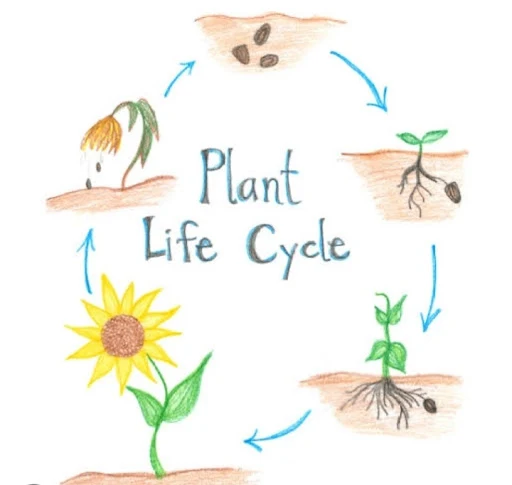
Life cycle of a flowering plant
🌺 Structure of a Flower
A typical flower has four main groups of parts: sepals, petals, stamens and carpels.

Main structural parts of a flower
Calyx: Protective Part
The calyx is made of sepals. Sepals are usually green and protect the flower while it is still a bud.
Corolla: Attractive Part
The corolla is made of petals. Petals are often colourful or fragrant and help attract pollinators.
Androecium: Male Part
The androecium is made of stamens. Each stamen usually has an anther and a filament. The anther produces pollen grains.
Gynoecium: Female Part
The gynoecium is made of one or more carpels. A carpel commonly includes the stigma, style and ovary.
🌷 Types of Flowers
Unisexual Flower
A unisexual flower has either male reproductive parts or female reproductive parts, but not both.
Examples: Papaya, cucumber and maize.
Bisexual Flower
A bisexual flower has both stamens and carpels in the same flower.
Examples: Hibiscus, mustard and rose.
🔄 From Flower to Fruit and Seed
During fertilisation, the male gamete from the pollen grain fuses with the female gamete inside the ovule. This forms a zygote.
- The zygote develops into an embryo.
- The fertilised ovule develops into a seed.
- The ovary usually develops into a fruit.
💡 Interesting Flower Facts
❓ Frequently Asked Questions
What is a flower?
What are the four main parts of a flower?
What is the function of sepals?
What is the male reproductive part of a flower?
What is the female reproductive part of a flower?
What is the difference between unisexual and bisexual flowers?
How do fruits and seeds form from a flower?
Who manages Speed Up Science?
📸 Learn More with Speed Up Science
Follow us on Instagram for colourful science notes, mind maps, reels and quick revision content.
Follow @speedupscience_Concept by Teacher Ritu • Designed and edited by Shaleen Shekhar

